Search in the UAE is no longer just about ranking on Google.
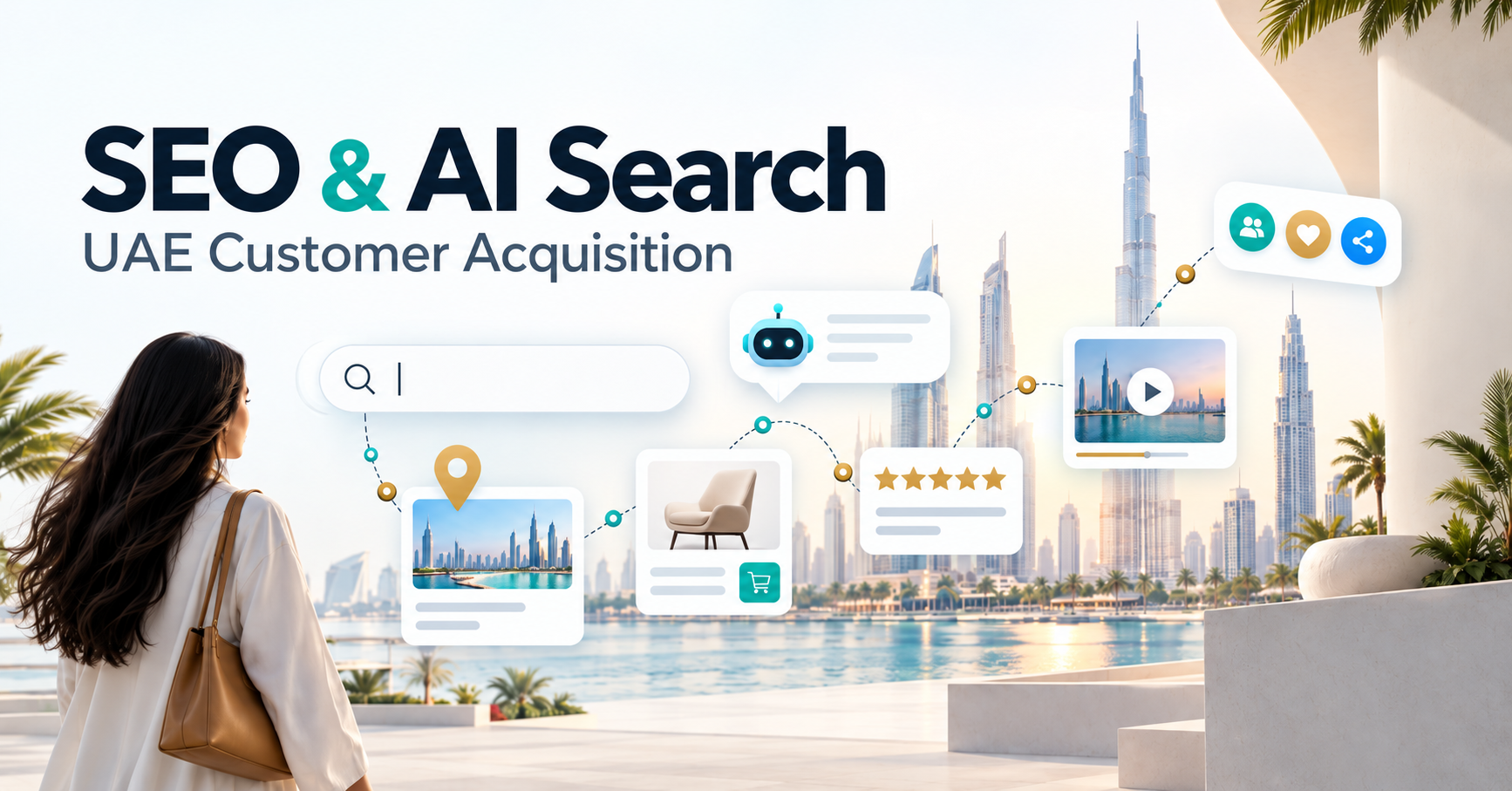
A customer may discover a product on Instagram, ask an AI platform for alternatives, search Google, check the nearest store on Maps, read reviews, watch a YouTube video and finally buy online or offline.
A business buyer may discover an idea on LinkedIn, research it through AI, Google potential providers, check community discussions and eventually speak to sales.
These are not separate journeys anymore. They are different parts of the same discovery process.
The useful question is therefore no longer:
How much organic traffic are we getting?
It is:
Can customers find, understand and trust us wherever they are making a decision?
That is the shift businesses in the UAE need to plan for.
AI search is growing, but SEO is not disappearing
AI-assisted search has moved well beyond experimentation.
In its May 2026 Search update for the MENA region, Google said AI Mode had passed one billion monthly users, while the number of AI Mode queries had more than doubled every quarter since launch.
At the same time, Google said overall search activity continued to reach record levels.
That distinction matters.
People are not simply moving from Google to AI. They are using search differently.
Someone may still search:
“KYC software UAE”
But increasingly they can ask:
“What should a regulated financial business consider when automating customer onboarding in the UAE?”
The second query is longer, more contextual and much closer to the actual business problem.
Traditional SEO remains strongest when demand is already formed: product searches, service searches, locations, prices, comparisons and provider searches.
AI search becomes more influential while customers are still understanding the problem, evaluating approaches or creating a shortlist.
For many businesses, both matter.
Start with what customers are already asking
Search strategy should not begin with a keyword tool.
Start inside the company.
Look at:
- sales-call transcripts
- demo recordings
- WhatsApp enquiries
- customer-support tickets
- CRM objections
- lost-deal reasons
- internal site search
- Search Console queries
- reviews
These sources reveal what customers actually care about.
If buyers repeatedly ask whether a product integrates with a particular system, that may deserve an integration page.
If customers constantly ask whether a service is available in Abu Dhabi, the website may need stronger local coverage.
If sales repeatedly explains the difference between two solutions, that may be a comparison page waiting to be created.
The same approach works for AI search.
Instead of inventing a list of AI prompts, take the questions prospects ask before purchasing.
Questions such as:
- What is the best way to solve this?
- What are the alternatives?
- Which providers should we evaluate?
- What does this normally cost?
- Is this suitable for the UAE?
- What should we compare?
- What are the risks?
These are natural AI-search queries.
Action to take: Review the latest 20 to 30 sales calls, support conversations or customer enquiries. Pull out the recurring questions. Compare them with Search Console and keyword data, then use the strongest 20 to 30 questions as both your content roadmap and your initial AI-search tracking set.
AEO still depends on good SEO
AEO or GEO should not be treated as a completely separate discipline.
The foundation is still roughly:
Crawling → Indexing → Understanding → Authority → Retrieval → Citation
Search engines and AI systems need to understand what the business does, who it serves, where it operates and why its information should be trusted.
A technically weak website does not become AI-ready because someone adds dozens of FAQs.
Strong service pages, product information, internal linking, clear site architecture, useful original content and external authority remain important.
There is a simple test.
Ask sales for the five things they have to explain on almost every call.
Then check whether the website explains each one clearly.
If sales repeatedly has to explain something the website should already explain, fix the website first.
The new search metric is not just ranking. It is also citation.
Traditional SEO gives us rankings, impressions, traffic and conversions.
AI search introduces another useful signal: whether the business becomes part of the answer.
A customer may encounter a company in an AI recommendation, later Google the brand, check LinkedIn or reviews and finally visit directly.
The original AI interaction may never receive credit in a last-click attribution system.
That makes it useful to track:
- brand appearances in important AI queries
- competitors that appear
- pages being cited
- third-party sources influencing the answers
- whether the company is described correctly
- AI referral traffic where identifiable
But citation should not lead to another wave of generic content.
“What is CRM?” or “What is KYC?” is increasingly easy for an AI system to answer without needing another article.
More defensible assets include:
- UAE benchmarks
- proprietary datasets
- pricing research
- surveys
- calculators
- market maps
- regulatory comparisons
- practical implementation data
Create fewer pieces, but make more of them worth referencing.
For retail, search extends into Maps, inventory and reviews
This is particularly important in the UAE because retail is a major part of the economy.
According to the Dubai Media Office's July 2026 economic update, wholesale and retail trade generated around AED50.9 billion in gross value added in Q1 2026 and represented roughly 22% of Dubai's GDP.
For a physical business, ranking the website is only one part of customer acquisition.
Customers also want to know:
- Where is the nearest location?
- Is it open now?
- Is the product available?
- Can I collect it today?
- What do other customers say?
That makes Google Business Profile, local inventory and reviews part of search strategy.
In the UAE, opening hours deserve particular attention because Ramadan, Eid, public holidays and mall schedules can materially change when customers can visit.
Action to take: Ask store or customer-service teams for the 10 questions people call about most frequently. If customers repeatedly ask about timings, parking, locations, stock or particular services, make those answers visible in Google Business Profile and the relevant location pages.
Product feeds are now part of search visibility
For ecommerce and retail businesses, optimisation increasingly happens in the product data itself.
Search platforms need accurate information about:
- product title
- category
- price
- availability
- image
- variants
- shipping
- promotions
That information feeds Google Shopping experiences, marketplaces, Meta catalogues and increasingly AI-assisted product discovery.
This also means SEO, merchandising and ecommerce teams should not operate with completely different product taxonomies.
The words used internally to describe a product may not be the words customers use to search for it.
Action to take: Take the 50 highest-revenue products and compare their feed titles and attributes with Search Console queries, internal site searches and customer questions. Where internal terminology differs from customer language, fix the product data.
Marketplace search deserves its own attention
For many product categories, Google is not where every buying journey begins.
Someone already ready to buy may search directly on Amazon or another marketplace.
At that point, product title, category placement, images, price, availability, reviews and delivery performance become the search experience.
Customer reviews are especially useful because they show which attributes shoppers care about enough to mention.
Action to take: Analyse recent reviews and product questions for the highest-selling marketplace listings. Identify the five attributes customers mention most and make sure they are easy to see in the listing.
Reviews are search data, not just reputation
Reviews are often managed as a customer-service metric.
They are also valuable search intelligence.
Businesses tend to describe themselves using internal or marketing terminology. Customers describe them using outcomes.
A company might say “seamless implementation.”
Customers may simply say “easy to set up.”
Those phrases can improve:
- landing pages
- FAQs
- product descriptions
- location pages
- AI-search questions
Action to take: Review the latest 100 customer reviews every quarter. Separate recurring themes into reasons people buy, reasons people complain and questions customers still have. Feed those findings back into content and product pages.
Search increasingly includes video and social discovery
Not every useful answer needs to be an article.
Some questions are easier to demonstrate through video.
If sales repeatedly screen-shares the same workflow, that is probably a useful YouTube topic.
If customer support repeatedly explains the same process, it may also deserve a video.
Social platforms play a different role.
Instagram and Meta can create demand that later appears as branded Google searches, Maps visits or direct traffic.
LinkedIn can distribute expertise in B2B categories.
Reddit can reveal unfiltered customer questions, comparisons and objections.
X can surface emerging conversations in fast-moving categories such as technology, fintech, AI and regulation.
The important point is not to use every platform. Use each one for the role it is good at.
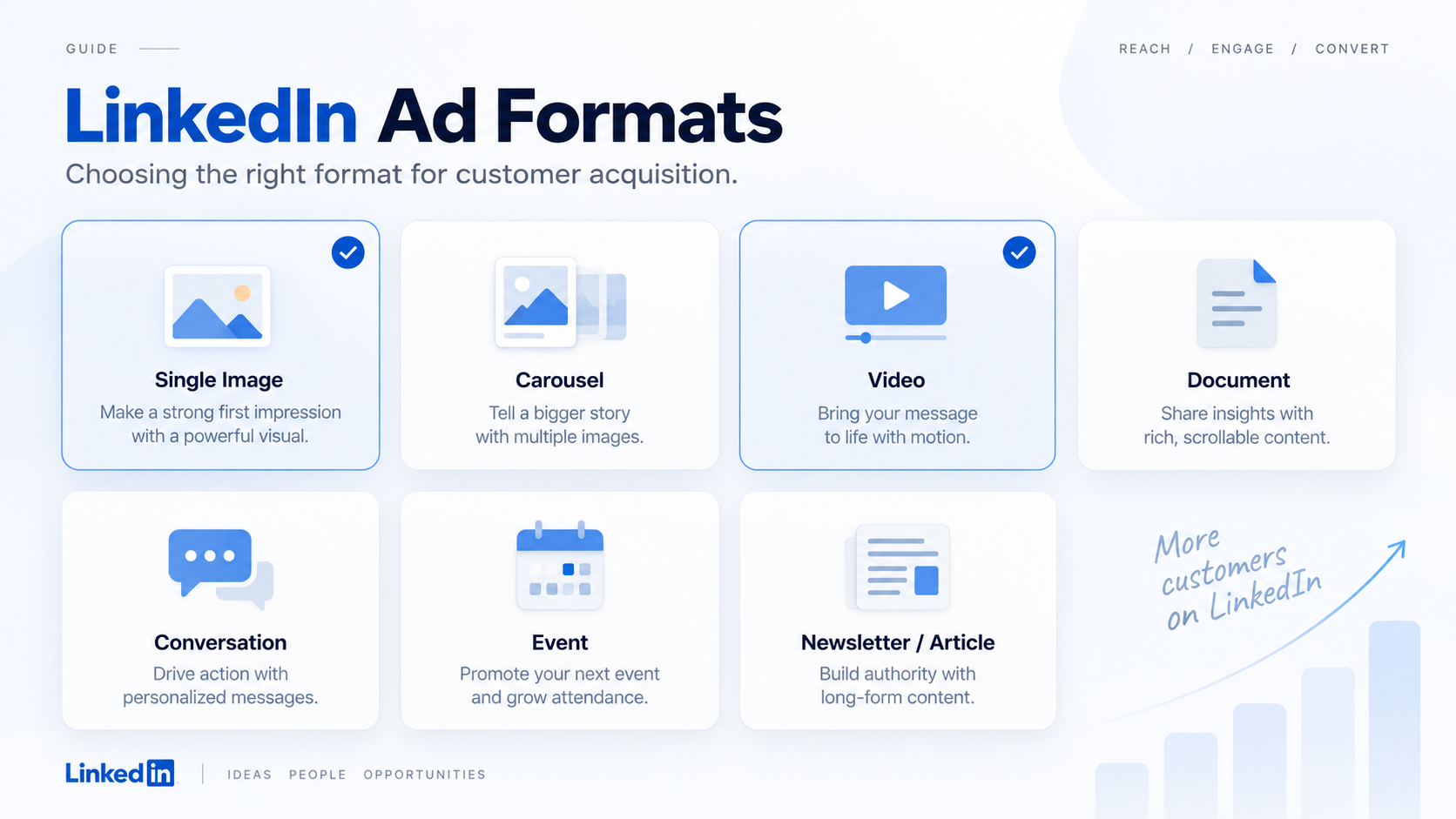
Action to take: When producing one important piece of research or analysis, plan at least three additional useful formats for it. That could be a PDF, YouTube video, LinkedIn carousel, short video, chart or FAQ.
One strong insight distributed well is generally more useful than several disconnected articles.
UAE localisation is more than translating into Arabic
Arabic can be important, but localisation should follow actual customer behaviour.
Look at:
- Dubai versus Abu Dhabi demand
- neighbourhood searches
- English versus Arabic enquiries
- location-specific inventory
- delivery areas
- Ramadan and Eid behaviour
- reviews by language
- local payment or service preferences
Some consumer and local-service categories may justify substantial Arabic investment.
For certain enterprise categories, English may continue to dominate much of the commercial journey.
Action to take: Analyse the last three to six months of enquiries by location, language and service requested before deciding what should be localised.
Measurement needs to follow the customer journey
Traditional search measurement should still include:
- commercial rankings
- qualified organic traffic
- conversions
- revenue
- local visibility
AI search adds:
- brand appearances
- citations
- cited pages
- competitor visibility
- AI referral traffic
- assisted conversions
Retail businesses should also monitor Maps interactions, review growth, product-feed health and inventory accuracy.
But one simple qualitative signal remains valuable.
Ask customers how they found you.
Someone may say:
“I first saw you on LinkedIn and then researched you through ChatGPT.”
An analytics platform may record that person as direct traffic.
Both pieces of information matter.
Action to take: Add “How did you first discover us?” to the sales or enquiry process and review those answers alongside attribution data.
Search is becoming one connected discovery system
The customer journey can now look like:
Instagram → AI search → Google → Maps → reviews → YouTube → purchase
or:
LinkedIn → AI research → Google → Reddit → PDF → sales call
The underlying journey is still familiar:
Discovery → Research → Validation → Availability → Trust → Action
SEO captures existing demand.
AI search increasingly shapes research and shortlists.
Maps connects digital discovery to physical locations.
Product feeds connect search to inventory.
Marketplaces capture purchase intent.
Reviews build trust.
Video explains.
Social platforms distribute expertise and create new demand.
The mistake is treating all of these as unrelated channels.
They increasingly form one search and discovery system.
The transition is therefore not simply from SEO to AEO.
It is towards search and discovery everywhere.
The businesses that adapt well will do three things consistently:
Rank when customers search.
Be present when customers ask.
Make accurate product, location and trust information available when customers are ready to act.